0

Immigration Advocacy Day

Posted by on Mar 25, 2010 in Events, News |
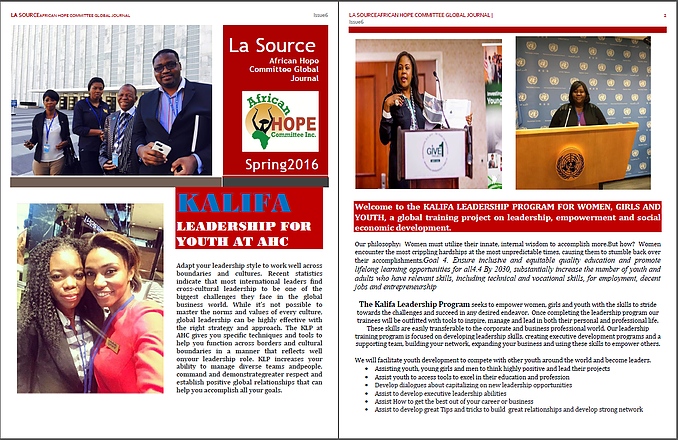
On Sunday March 21, 2010, African Hope Committee’s staff joined over 200,000 people in Washington DC to demand Immigration Reform and ask for Change Now including right to liberty and right to family.  People from all walks of life, fearlessly came from all over the nation to manifest this day.
Thousands of New Yorkers traveled that morning to WDC where some got there by bus secured by the NYIC or on their own. It did not matter, they simply were looking to be present and live this day.

Thousands of Africans and other immigrant groups from the entire nation were present to demand and ask for the Immigration Reform, so they could be reunited with their families already being separated from them.

AHC was part of this Historic Mobilization.  This was an amazing manifestation in our nation in Washington DC since The Obama’s Inauguration.

African Hope Committee will like to thank all the African community and families that made this day happened. AHC witnessed African families that came from New York, Boston, Maryland, Ohio, and Houston where most of them keep saying Yes, we want CHANGE NOW.

You can view pictures of that incredible moment where African families and people from other communities came together asking for Change.

Visit www.afriquehope.org to learn more about our service.

Tags: , ,

 
0

2009 Health Summit

Posted by on Jan 25, 2010 in Events, Main, News |

Check out this link for the 2009 Health Summit pictures

Tags: , , ,

 
0

Help us raise funds

Posted by on Jan 25, 2010 in Events, Main, News, store |

Check out http://www.afriquehope.org/ for our online store and facebook donations

Tags: , ,

 
0

Our 44th President

Posted by on Jan 25, 2010 in Main, News |

Tags: , ,

 
0

Donate Funds for the Tragedies in Haiti

Posted by on Jan 25, 2010 in Main, News, Press release |

Address:

American Red Cross

520American Red Cross in Greater New York
West 49th Street
New York, NY 10019

Phone: 212-875-2000

Fax: 212-875-2309

Web site: http://www.nyredcross.org

Text HELPHAITI followed by the amount of your donation to 56512

The Process is simple:

  1. Text the word HELPHAITI (and right after type the amt in dollars)
  2. Send to 56512
  3. You will receive the following message back:
    • “Thanks for your donation to Red Cross Disaster Relief for Haiti via
      Paybyweb.com. To confirm, please reply YES.”
    • Once YES is entered, you will receive the following message:
    • “Thank you for your donation pledge. We will be calling you at this number to collect your payment information, or you can call 1-800-303-3781.
You can also contact:

Earthquake Info at: 888-407-4747

State.gov
311

To find information about friends and family in Haiti: The U.S. State Department set up a toll-free number to call for information about family members in Haiti:
1-888-407-4747.

Most in need now are funds, medical supplies and water.

The Haitian Council General Felix Augustin also announced in New York that, you could donate directly through

CHASE BANK:

ACCOUNT# 761549039

For any questions, you can contact
African Hope Committee, Inc.: 212-862-9010 or email at info@afriquehope.org , visit www.afriquehope.org

Clarisse Mefotso Fall,
MPH
Executive Director/Founder

Tags:

 
0

Balafon News

Posted by on Jul 19, 2009 in News, Notable Mentions |
President Barack Obama’s remarks on Africa at Press Conference in l’Aquila Italy at end of G8 Meeting, today Friday July 10th 2009
(all emphases are mine)
Courtesy of www.whitehouse.gov
Mr. President, we were told that you made your appeal for the food security money during the meetings personal by citing your family experience in Kenya, your cousin and so forth.  I wonder if you could relate to us a little bit of what you said then, and talk about what — your family experience, how that influences your policies and approach.
THE PRESIDENT: What you heard is true, and I started with this fairly telling point that when my father traveled to the United States from Kenya to study, at that time the per capita income and Gross Domestic Product of Kenya was higher than South Korea’s. Today obviously South Korea is a highly developed and relatively wealthy country, and Kenya is still struggling with deep poverty in much of the country.

And the question I asked in the meeting was, why is that?  There had been some talk about the legacies of colonialism and other policies by wealthier nations, and without in any way diminishing that history, the point I made was that the South Korean government, working with the private sector and civil society, was able to create a set of institutions that provided transparency and accountability and efficiency that allowed for extraordinary economic progress, and that there was no reason why African countries could not do the same. And yet, in many African countries, if you want to start a business or get a job you still have to pay a bribe; that there remains too much — there remains a lack of transparency.
And the point that I was trying to underscore is, is that as we think about th is issue of food security, which is of tremendous importance — I mean, we’ve got 100 million people who dropped into further dire poverty as a consequence of this recession; we estimate that a billion people are hungry around the globe.  And so wealthier nations have a moral obligation as well as a national security interest in providing assistance.  And we’ve got to meet those responsibilities.
The flip side is, is that countries in sub-Saharan Africa and elsewhere in the world that are suffering from extreme poverty have an obligation to use the assistance that’s available in a way that is transparent, accountable, and that builds on rule of law and other institutional reforms that will allow long-term improvement.
There is no reason why Africa cannot be self-sufficient when it comes to food.  It has sufficient arable land.  What’s lacking is the right seeds, the right irrigation, but also the kinds of institutional mechanisms that ensure that a farmer is going to be able to grow crops, get them to market, get a fair price. And so all these things have to be part of a comprehensive plan, and that’s what I was trying to underscore during the meeting today.
Q And your own family, sir?
THE PRESIDENT: What’s that?
Q Your own family?
THE PRESIDENT: Well, the point I was making is — my father traveled to the United States a mere 50 years ago and yet now I have family members who live in villages — they themselves are not going hungry, but live in villages where hunger is real.  And so this is something that I understand in very personal terms, and if you talk to people on the ground in Africa, certainly in Kenya, they will say that part of the issue here is the institutions aren’t working for ordinary people.  And so governance is a vital concern that has to be addressed.
Now keep in mind — I want to be very careful — Africa is a continent, not a country, and so you can’t extrapolate from the experience of one country.  And there are a lot of good things happening.  Part of the reason that we’re traveling to Ghana is because you’ve got there a functioning democracy, a President who’ s serious about reducing corruption, and you’ve seen significant economic growth.
So I don’t want to overly generalize it, but I do want to make the broader point that a government that is stable, that is not engaging in tribal conflicts, that can give people confidence and security that their work will be rewarded, that is investing in its people and their skills and talents, those countries can succeed, regardless of their history.
Paule-Sylvie Yonké
The Whole world for OBAMA
Balafon/The Global African experience
News, Events, People, History, Business, Arts and Culture
Tel: 347-879-6107

Copyright © 2010 AHC Blogs All rights reserved. Theme by Laptop Geek.